Stories

Adventure
Dive
|
February 2025

Moalboal Moves to the Rhythm of the Sea

There’s a place in Cebu where time unravels slowly, where mornings begin with the sound of waves and end with fiery sunsets melting into the horizon. Moalboal, a quaint peninsula town tucked along the island’s southwestern edge, is one of those rare destinations that gently coaxes you to let go. Let go of the rush. Let go of the noise. Let go and just be. 

For the locals, life in Moalboal is lived in tune with the tides. Fishermen rise with the sun to cast their nets into the glistening sea, while children splash in the shallows, chasing little fish that dart between their toes. At the market, the morning catch is laid out with pride—glistening, fresh, and caught just hours before. There’s a quiet poetry in the way life moves here, in the way the community continues age-old traditions with ease and grace.  

But beneath Moalboal’s surface lies an even more vivid world. Just a short boat ride away is Pescador Island, a diver’s dream and the heart of the region’s marine sanctuary. Here, the sea explodes in color: swirling sardine balls, dancing schools of fish, and sea turtles gliding effortlessly through coral canyons. It's no wonder this sleepy coastal town has become a pilgrimage site for divers and ocean lovers from around the world. 

At the center of this soulful seaside life is Grafik Moalboal—a retreat that doesn’t just sit by the shore but lives and breathes the coastal culture. It’s where coastal luxury meets local rhythm. Here, you’re not just a visitor—you’re part of the slow, salt-streaked story of Moalboal. And in a world that rarely stops, places like this feel like a deep breath you didn’t know you needed.

Mountain View
|
March 2025

Into the Heart of the Highlands: A Journey Through Batad, Ifugao

There are places that ask to be admired from a distance, and there are places that invite you to come closer—to breathe in their stories, to walk their paths, and to feel their pulse beneath your feet. Batad, Ifugao is the latter. Tucked deep in the Cordillera region and surrounded by mountains veiled in mist, this quiet, almost-hidden village is where the past and present hold hands. For travelers seeking to go beyond the ordinary, Batad offers a raw, soul-stirring adventure—one that begins long before you step into the land honored by generations. 

From Grafik Pine House Baguio, the journey to Batad is a transition—from pine-laced air and city bustle to mountain quiet and ancestral rhythm. After a scenic drive past Banaue’s lookout points and winding provincial roads, you arrive at the saddle—the last point reachable by vehicle. From here, the rest of the journey is made on foot. 

The trail into Batad is a 20-minute descent, a humble initiation into the village’s charm. The path is earthy, uneven, sometimes slippery when it rains—but it unfolds slowly, like a secret being told one line at a time. As the treetops part and the air grows cooler, Batad reveals itself: rice terraces carved into the mountainside in harmonious balance, like amphitheater steps leading down to the heart of the earth. 

Batad is a village without roads, only narrow trails and stone steps, and that’s part of its charm. The homestays that greet you at the edge of the terraces are simple, but comforting. Here, mobile connectivity is weak, but connections—real ones—run strong. As the sun casts golden light across the terraces, you watch villagers tend to the fields, unhurried, unbothered. Life here moves to the natural pace of the mountains. 

 A scenic walk leads deeper into the terraces, taking you to the main village at the center, where the Ifugao culture quietly thrives. Traditional huts with their peaked thatched roofs stand beside modest concrete homes, a blend of heritage and change. Children dart through the maze of footpaths. Elders sit in quiet corners, rhythmically milling rice by hand or telling stories in a language that carries centuries of memory. 

But if Batad has a crown jewel beyond the terraces, it is surely Tappiya Falls—a roaring cascade that demands both courage and stamina. The trek from the main village takes about an hour, and it is no easy feat. Steep slopes, muddy steps, and narrow ledges test your endurance, but every step is a promise: of something wild, untouched, and worth the effort. 

When you finally arrive, you’ll understand. Tappiya is not just a waterfall—it is a cathedral carved by nature. Towering cliffs surround it like ancient guardians. Mist rises from the plunge pool, cool and crisp, the roar of water silencing every stray thought. Some travelers strip off their shoes and dive in. Others sit by the rocks, letting the mist kiss their faces. Either way, it’s a moment you’ll carry long after you’ve left.  

Batad doesn’t offer luxury. It offers something better—perspective. It teaches patience. It invites reflection. And in its silence, it speaks volumes. For those staying in Grafik Pine House Baguio, a journey further into the soul of the Cordillera is a natural continuation of the highland experience. It’s not just about changing scenery—it’s about deepening the story.  

Here, at the edge of the terraces and the lip of a waterfall, you don’t just visit. You arrive. Fully, finally. And you leave different than you came.

Culture
Campfire
|
March 2025

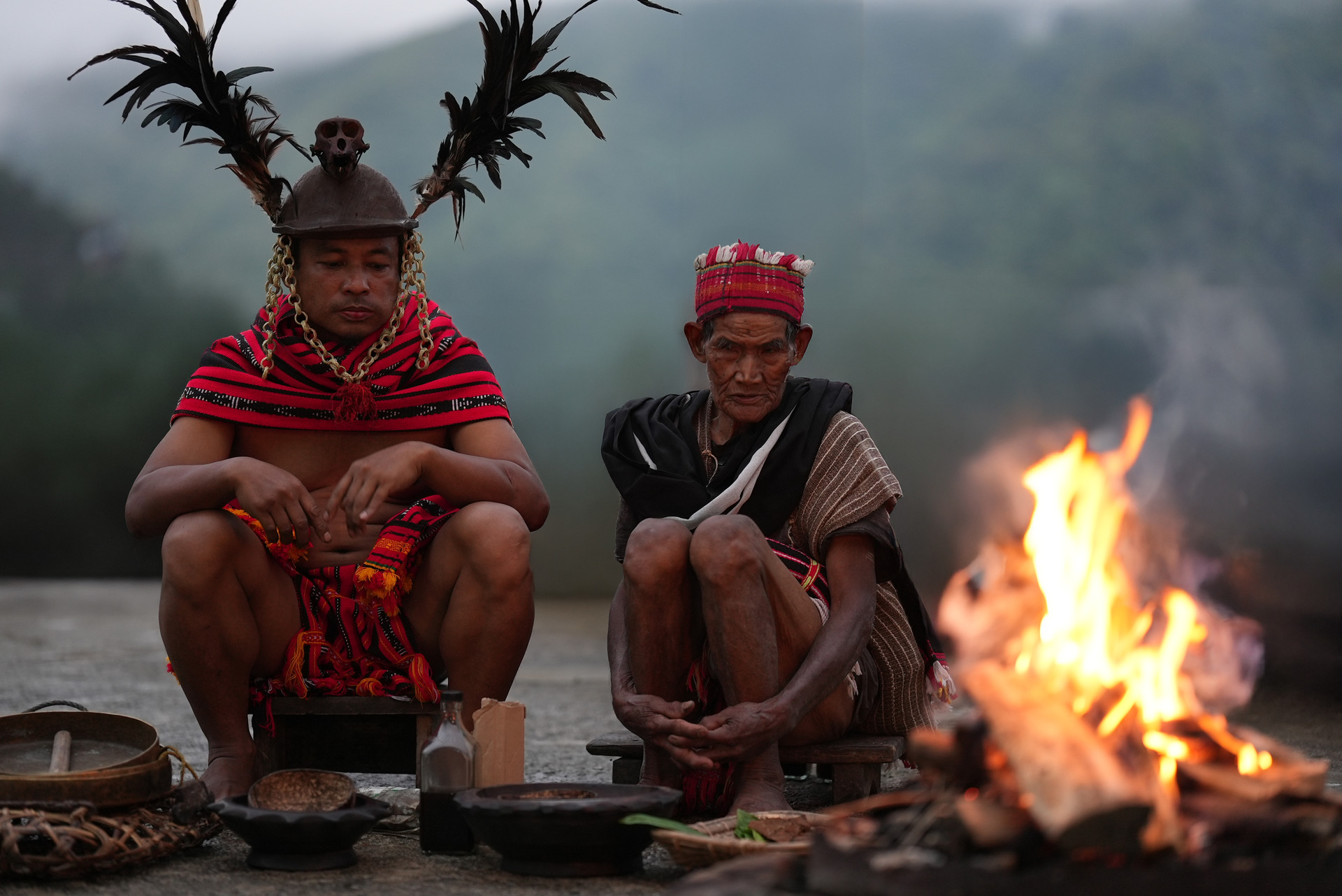
Whispers of the Mountains: The Mumbaki of Batad

In the mist-veiled terraces of Batad, Ifugao, where time seems to stand still, lives a keeper of culture—the Mumbaki. Known as a spiritual leader, healer, and guardian of tradition, the Mumbaki performs ancient rituals and prayers that connect the Ifugao people to their ancestors and the natural world. These ceremonies are not remnants of a forgotten past but living testaments to a culture that thrives quietly in the highlands. 

The Mumbaki’s prayers are poetic, often spoken in the native tongue, invoking deities such as Kabunyan to offer protection, healing, or guidance. Rituals may involve animal sacrifice, dance, or chants—each movement and word imbued with purpose. These are performed not for spectacle, but as acts of deep spiritual significance, often within the sacred space of the bale or village hut. 

This spiritual framework shapes the rhythm of life in Batad, from planting season to harvest, from birth to death. It is a culture that honors balance—between man and nature, life and afterlife. 

At Grafik Pine House Baguio, we believe in honoring these quiet yet powerful narratives. With our opening, we unveil the untold stories of the Cordilleras—tales that deserve a voice beyond the terraces. The story of the Mumbaki is but one thread in the vibrant tapestry of Ifugao heritage, a reminder that tradition is not frozen in time but alive in prayer, ritual, and memory. 

Let this be an invitation—to listen deeply, to see beyond the surface, and to explore the cultural soul of the highlands.

Wellness
Dive
|
March 2025

A Sea of Stillness: Finding Wellness in Moalboal

Some places whisper. Others heal. 

Moalboal, a laid-back town on the southwestern coast of Cebu, is one of those rare escapes where wellness isn’t forced—it’s felt. It isn’t about checklists or routines, but about reconnecting with what matters. Here, wellness flows naturally—from the salty sea air that greets you at sunrise to the quiet lull of waves that cradle you to sleep. 

Surrounded by turquoise waters and rich marine life, Moalboal is a sanctuary not just for the body, but for the soul. A morning swim becomes a form of meditation. A walk along the shore becomes grounding. Yoga under the canopy of coconut trees feels more meaningful when all you hear is the rustle of leaves and the soft crashing of waves. This is a place where nature invites you to pause—and be present. 

Local life mirrors this rhythm. Meals are fresh and nourishing, often caught just hours before and cooked with care. Afternoons stretch long, filled with time for naps, books, or simply gazing out into the endless blue. There’s no pressure to perform, no expectation to be busy. And in that freedom, you begin to unwind. 

Grafik Moalboal embraces this philosophy of unhurried well-being. Whether it's lounging by the sea, joining a coastal yoga flow, or indulging in a massage to the soundtrack of the ocean, every experience is designed to nurture stillness and simplicity. 

In Moalboal, wellness isn’t a trend. It’s a way of life—quiet, deep, and lasting. And for those seeking balance in a world that moves too fast, this seaside haven offers a gentle reminder: the most powerful form of healing often comes from simply doing less—and feeling more.

Sustainable Travel
Fish
|
March 2025

The Soul Beneath the Surface

In the quiet coastal town of Moalboal, Cebu, the sea offers more than just beauty—it offers a responsibility.

Moalboal is the kind of place that doesn’t announce itself. It doesn’t need to. Tucked away in the southern stretch of Cebu, this quiet town has slowly made its way into the hearts of divers, backpackers, and seekers of something unspoiled. What it lacks in flash, it makes up for in depth—literally and figuratively. The town is modest, but the world beneath its waters is extraordinary.

Here, the sea hums with life. Just a few steps off the rocky shore of Panagsama Beach, the famed sardine run begins—millions of shimmering fish moving in perfect unison, twisting and curling like smoke underwater. No boat needed, no deep-sea gear required. It’s one of the few places in the world where nature performs on schedule, day after day, season after season.

Not far from this silver spectacle, sea turtles glide gently through the reef. They're not rare sightings in Moalboal—they’re companions of the current, often brushing past swimmers with quiet, ancient grace. Beyond them lies Pescador Island, a reef-rich dive site where the sea drops off dramatically into vibrant coral walls, caves, and a kaleidoscope of marine life that both humbles and stirs.

But what makes Moalboal more than just a dive destination is its growing soul—rooted in its people and their deepening commitment to protecting what they’ve long known to be precious. This is a community that grew up with the sea, that fished its waters long before dive shops and cafes arrived. And now, as more travelers are drawn to its raw beauty, the locals are also stepping into the role of stewards. Dive guides and boatmen, many of whom once lived off the catch of the day, now lead with a different kind of purpose: to educate, to guide, and to protect.

It’s common to hear the quiet reminders from a guide before slipping into the water—don’t touch the coral, don’t chase the turtles, don’t kick your fins too close to the reef. These aren’t just rules. They’re part of a culture that is trying—gently but urgently—to keep this place alive.

And this responsibility doesn’t belong only to the locals. Tourists are just as vital to the future of Moalboal. Every decision made while visiting here, no matter how small, creates a ripple. It’s in the choice to wear reef-safe sunscreen instead of chemical-laden brands that bleach the coral. It’s in the patience to float and observe rather than reach out and disturb. It’s in choosing locally owned accommodations and dive shops that invest back into the community, that run clean-up dives, that pay fair wages, and that educate with care.

Moalboal’s magic lies not just in what it offers, but in how it invites you to be part of something bigger. Here, you’re not a consumer of paradise—you’re a guest, a temporary resident of a fragile world that continues to thrive only because enough people choose to protect it. This isn’t about grand gestures. It’s about consistency, respect, and awareness.

There’s something deeply grounding about swimming through a school of sardines or locking eyes with a turtle underwater. It reminds you that nature doesn’t exist for entertainment—it exists to be honored. In a town as small as Moalboal, that honor means everything. The locals feel it. The sea reflects it. And the future of this coastal wonder depends on it.

Let this be the kind of destination where beauty is not just seen but safeguarded, where the memories we take home don’t come at the expense of the place that gave them. Moalboal may be small, but what it holds beneath its waters is immense—and it’s up to all of us to keep it that way.